Toronto Biennial of Art 2026 Announces Curatorial Framework and Artists
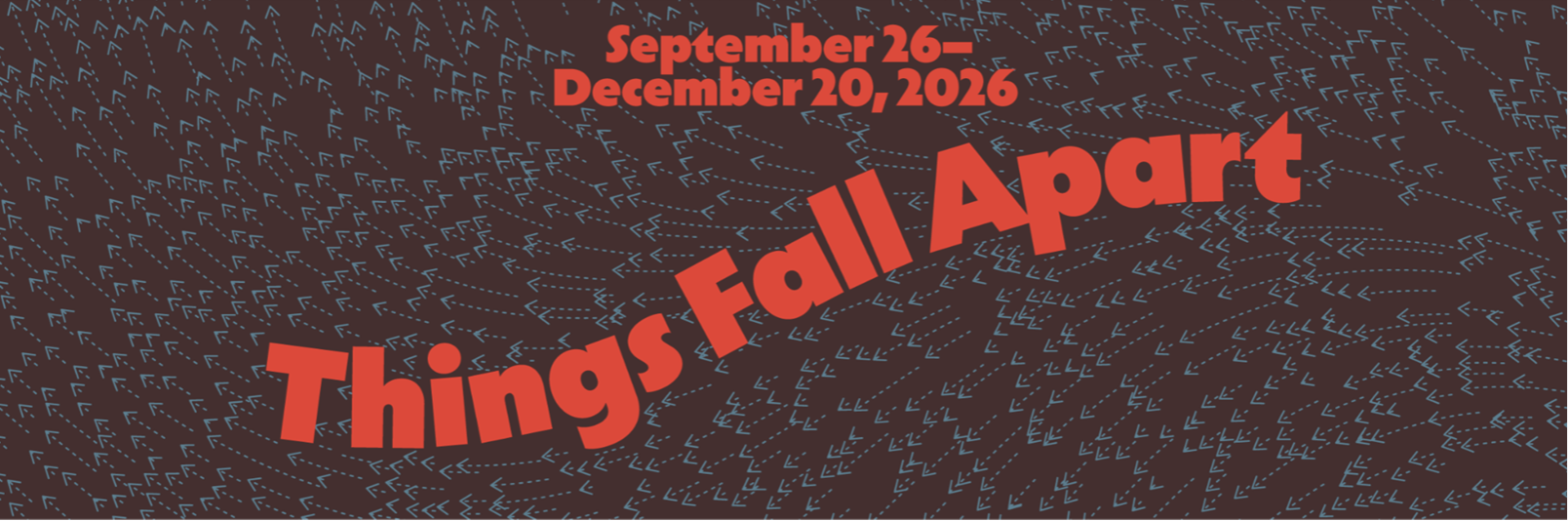
Things Fall Apart
Toronto Biennial of Art (TBA) 2026
September 26 – December 20, 2026
Curator: Allison Glenn
torontobiennial.org
The Toronto Biennial of Art (TBA) has announced the curatorial framework, participating artists, and exhibition sites for its fourth edition, taking place from September 26 to December 20, 2026. Led by curator Allison Glenn, and under the continued direction of Executive Director Patrizia Libralato, the Biennial will bring together over 30 artists and collectives from Canada and across the globe.
Titled Things Fall Apart, the 2026 edition is shaped by Glenn’s research-driven and site-responsive approach, centring on artistic practices that engage rupture not as collapse, but as a generative condition. Through this lens, the Biennial reconsiders the histories, geographies, and systems that structure contemporary life, while opening new ways of understanding the present.
For the first time, the Biennial will extend beyond the Greater Toronto Area through a series of artist-led projects and institutional collaborations across North America, marking a significant expansion of its geographical and conceptual scope.
“With the announcement of our 2026 curatorial theme and artist list comes an exciting milestone for the 2026 Toronto Biennial of Art,” states Patrizia Libralato, Founder and Executive Director. “As we introduce this year’s project, we expand outward as Canada’s biennial, reflecting the unique identity of Toronto by bringing together voices from across Canada and around the world. TBA 2026 sees us deepening existing partnerships, cultivating new ones, extending artist projects beyond the Toronto region, and bringing Allison Glenn’s thoughtful vision to life. We are proud to facilitate dialogue at a time when so much feels uncertain, reaffirming our shared commitment to access, cultural vitality, and a recognition that contemporary art is not peripheral to public life, but central to it.”
The title Things Fall Apart draws on the enduring resonance of the phrase across literature, music, and cultural discourse, from Chinua Achebe’s landmark novel to W.B. Yeats’s poem The Second Coming. Within the context of the Biennial, it becomes a way to think through periods of political and social transformation, understood not as endpoints, but as openings.
Unfolding through ideas of syncopation and rupture, the exhibition positions instability as a site of possibility. Central to this framework is water, which emerges as both material and methodology, connecting the geographies of the Great Lakes region to wider global waterways, from the Atlantic and Caribbean to the Persian Gulf. Through these fluid systems, the Biennial traces histories of migration, trade, extraction, and resistance that continue to shape contemporary conditions.
“The 2026 Toronto Biennial of Art is an invitation to view the Great Lakes, and global waterways, as a confluence,” says curator Allison Glenn. “Growing up in nearby Detroit deeply informed my understanding of how water, as both a physical resource and a historical witness, connects distant geographies through shared, fluid systems. The expansion of the Biennial footprint across international borders is driven by this curatorial frame and a cohort of artists and collaborators whose work is profoundly site-responsive, connecting to histories and moments of rupture across vast waterways. The opportunity to work in consultation with the National Curatorial Advisory, and to travel across Canada, provided critical insight into the country’s diverse landscapes and artistic practices. I meet this moment with gratitude for the opportunity to stay nimble and adaptive, building a Biennial that honours local histories while navigating the vast currents of our contemporary world.”
The Biennial will feature over 30 artists and collectives, including both Canadian and international participants, with 17 newly commissioned works developed in close dialogue with Toronto’s urban fabric and surrounding regions.
Exhibition sites will span major cultural institutions, public spaces, and non-traditional venues across the Greater Toronto Area. The Art Museum at the University of Toronto will serve as the main exhibition partner, alongside venues such as the Art Gallery of Ontario, Aga Khan Museum, Royal Ontario Museum, Harbourfront Centre, and a range of public and civic spaces including Sankofa Square and Toronto Pearson Airport.
In parallel, a new model of collaboration will extend artist projects beyond Toronto, with presentations in cities including Anchorage and New York, as well as multi-sited works developed across different geographic contexts.
Throughout its run, TBA 2026 will be accompanied by an extensive programme of performances, convenings, and learning initiatives, including a three-day gathering in October that will bring together artists, curators, and audiences to engage with the Biennial’s core questions. The exhibition will also be accompanied by a publication, Things Fall Apart: Notes on Rupture, expanding on the curatorial framework through essays, conversations, and artist contributions.
With its fourth edition, the Toronto Biennial of Art continues to position itself as a platform for both local and international dialogue, foregrounding contemporary art as a critical space for navigating uncertainty, imagining alternatives, and engaging the complex conditions of the present.
To hear more about the Toronto Biennial of Art, practical resources to plan your visit and beyond keep following TBA’s social media and webpage.