SACO1.2
“Dark Ecosystems”
July 17, 2025 – September 14, 2025
Bienal Saco
After an exhaustive evaluation and analysis, the jury of the international call for the SACO1.2 Contemporary Art Biennial selected the seven artists who will be part of the exhibition Dark Ecosystems, which will be displayed from July 17 to September 14, 2025, as tradition, at the Melbourne Clark Historic Pier in Antofagasta.
Artists from Brazil, Chile, Iceland and for the first time Mongolia, New Zealand and Russia will be part of the collective exhibition of the twelfth edition of SACO, which emphasizes in the link between art and science, seeking to display contemporary artworks in spaces that allow dialogue and direct contact between artists and the public. The selected proposals correspond to creators from three different generations, the oldest being 67 years old and the youngest 26.
The director of the SACO Biennial, Dagmara Wyskiel, highlighted the interest and diversity of the selected group, emphasizing: “Numerically, we have four women and three men, a proportion that we did not look for but that seems optimal to us. There are four continents, three generations, two migrants and a magnificent cultural and creative diversity, which will undoubtedly move the visitors of Dark Ecosystems”.
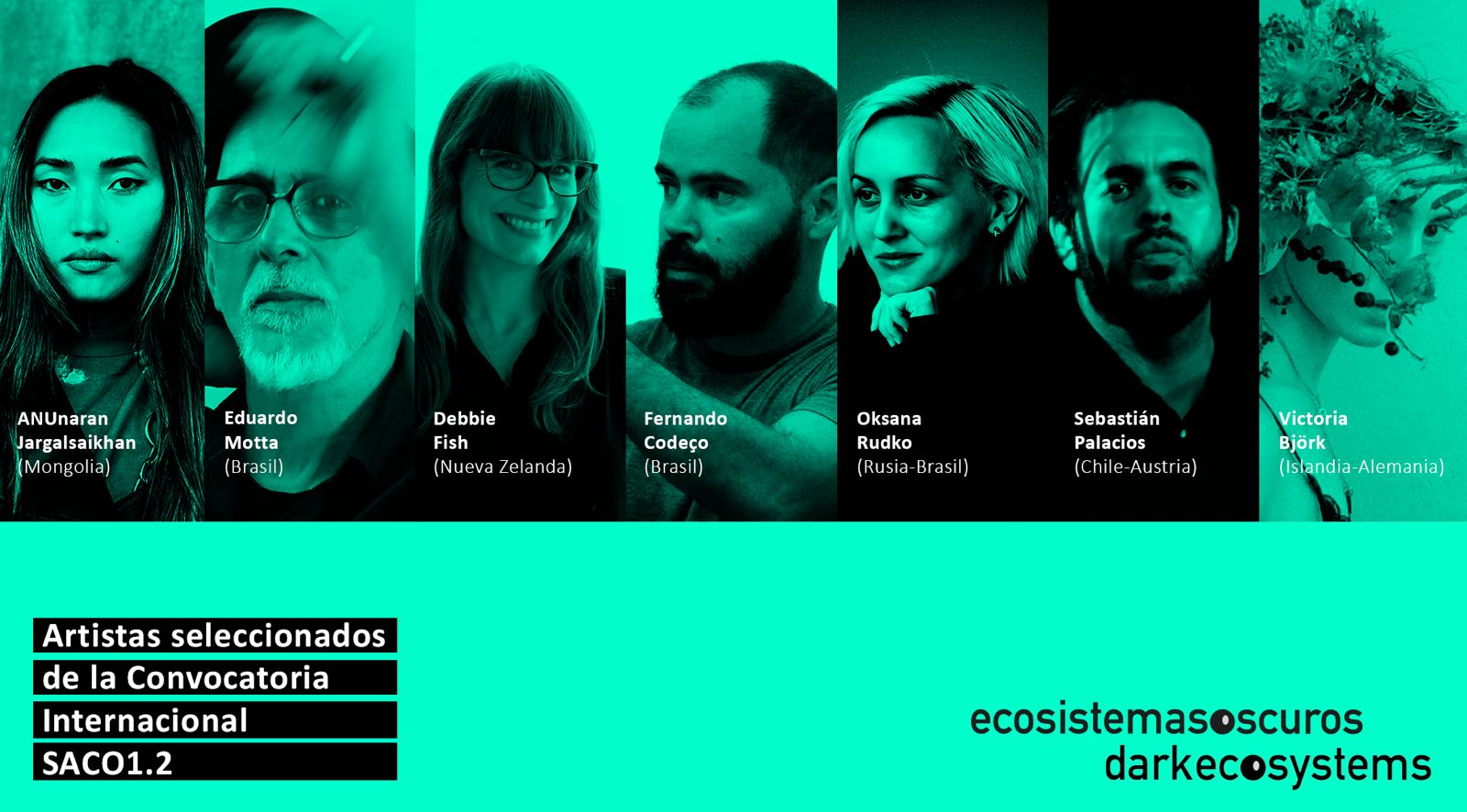
The creators and proposals chosen are:
ANUnaran Jargalsaikhan (Mongolia), a multidisciplinary artist whose work focuses on universal dualisms such as feminine and masculine, inner and outer, subconscious and conscious, and metaphysical and physical. With the work NAGA, she aims to make visible the consequences of our actions on nature, advocating for respect in our world.
Eduardo Motta (Brazil), an artist who intervenes photographs and videos, tracing a journey of accidents and dislocations that affect meanings in contemporary times. His proposal, Sense, is a series that uses images that establish relationships between faces photographed in art magazines, dramatic events in newspapers, cellular organisms in scientific pages, and the morphology of organisms in the Atacama Desert and local landscapes.
Debbie Fish (New Zealand), an installation artist who works with found and recycled materials to create large-scale sculptures, understanding the importance of circular economies. In Glass Sponge she presents a ghostly group of marine sponges, while reflecting on their role in medicine and their vulnerability to underwater mining and climate change.
Fernando Codeço (Brazil), researcher, visual artist and theater director, interested in the ecopolitics of the arts in contexts of climate emergency, employing elements of social museology, environmental, contextual art and performance. The work Pesca fantasma will install fishing nets between the cranes of the pier, forming huge spider webs, shifting the meaning of phantasmagoria, in which the risk of capture will no longer be for living beings, but for imaginary beings and for the gazes of passers-by.
Oksana Rudko (Russia-Brazil), an artist who addresses the placement of sound in unusual places and the collision of different media, turning personal photography into sound recordings and field audio recordings into images. Whisper of the Stars proposes a seven-channel interactive sound installation consisting of wooden boxes with motion sensors containing a unique sound of flowing grain, recorded in different parts of South America.
Sebastián Palacios (Chile-Austria), Master in Architecture, whose training and career have been deeply influenced by his interest in arid environments, particularly in the Atacama Desert, which he has explored through architectural projects, research and cultural management. In Manto develado, a model suspended from the ground will represent part of the saline landscape of the highlands, under which square mirrors will reflect fragments, symbolizing the division of the territory into mining quadrants.
Victoria Björk (Iceland-Germany), a visual artist specialized in sculptural works and performances that explore the boundaries between time and nature, dreams and reality, and nurture and destruction. Her proposal consists of a large dress left by a fictional character, Temperance, a guardian of balances; a short fictional story that speaks of the great being and its symbolism for resistance, invisible vitality and the dark ecologies that are dreams.
SACO1.2 Dark Ecosystems Biennial will take place in different parts of the Antofagasta region with the aim of establishing in the Atacama Desert a permanent nucleus of reflection, criticism and dialogue through the meeting of artists, experts, curators, works and the public. More information about the artists and their works, as well as details of the new edition are available on SACO’s social networks and website.
SACO Biennial is presented by Escondida | BHP and financed by the Support Program for Collaborating Cultural Organizations, PAOCC, of the Chilean Ministry of Culture, Arts and Heritage.