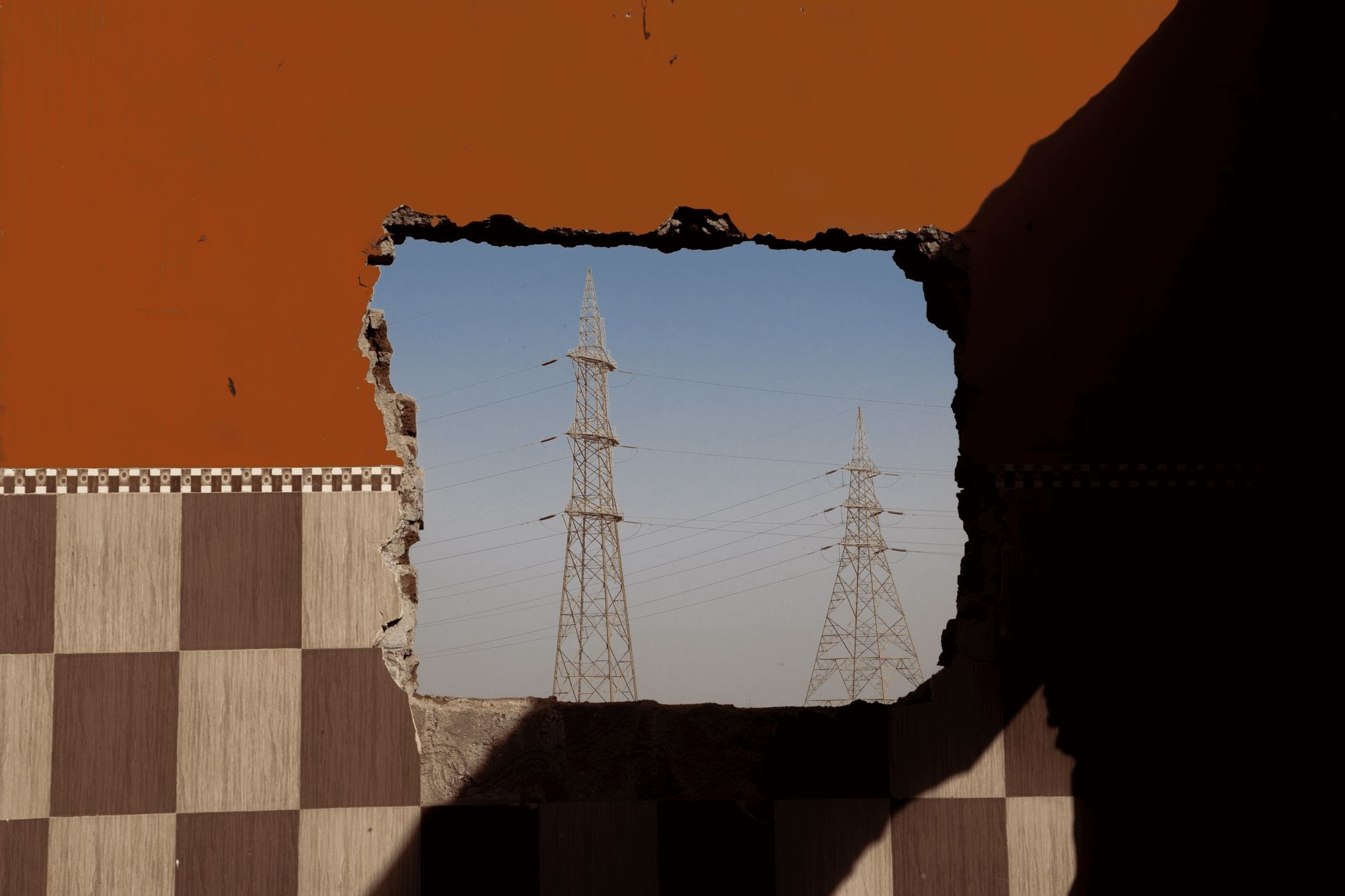
A home in Ganeshpuri village, on the present-day site of Navi Mumbai International Airport. Photo: Kush Badhwar. Courtesy Sharjah Architecture Triennial
Architecture Otherwise: Building Civic Infrastructure for Collective Futures
Sharjah Architecture Triennial
November 14, 2026 – April 14, 2027
The Sharjah Architecture Triennial (SAT) has announced the dates and participants for its third edition, Architecture Otherwise: Building Civic Infrastructure for Collective Futures, opening on November 14, 2026 and running until April 14, 2027 across Sharjah. As the first major platform dedicated to architecture and urbanism across the Middle East, North and East Africa, and Asia, the Triennial continues to position architecture as a critical tool for engaging with the social, cultural, and political realities shaping contemporary cities.
Curated by Vyjayanthi Rao, with Tau Tavengwa as Associate Curator, SAT03 brings together 32 participants whose practices span architecture, anthropology, urbanism, art, design, education, and community-based initiatives. Through newly commissioned installations, films, archives, workshops, performances, lectures, and long-term public programmes, this multidisciplinary edition proposes architecture as a practice rooted not only in buildings but in relationships, infrastructures of care, and collective forms of living.
Rather than focusing solely on the built environment, Architecture Otherwise examines the social and civic infrastructures through which communities are formed and sustained. Across projects developed specifically for Sharjah, participants investigate themes including migration, displacement, climate adaptation, food systems, heritage, mobility, education, spirituality, public space, and collective memory. Many of the works emerge from extended research residencies, grounding the exhibition within the city’s layered urban fabric while engaging with questions that resonate far beyond its local context.
Several commissions explore architecture under conditions of movement and displacement, examining how temporary structures, mobile infrastructures, and adaptive forms of building respond to migration and uncertainty. Others investigate the consequences of large-scale urban development, asking how cities can remain attentive to ecological systems, local histories, and the communities most directly affected by processes of transformation. Throughout the Triennial, architecture is presented not as a fixed discipline but as an evolving framework through which collective futures can be imagined and negotiated.
A strong emphasis is placed on the everyday practices through which civic life is sustained. Projects throughout the exhibition consider informal networks of care, community-led planning, shared learning, food cultures, storytelling, and public gathering as forms of infrastructure no less essential than buildings or roads. By expanding the notion of architecture to include these lived and relational dimensions, the Triennial proposes new ways of understanding how cities are collectively produced.
Reflecting on the curatorial framework, Vyjayanthi Rao writes:
“Architecture Otherwise focuses on how cities are experienced, co-created, and transformed through the everyday social and cultural practices that shape collective life. Against the exceptionalism, extractive logics, and separations that characterize architecture as usual, the Triennial proposes other ways of imagining, inhabiting, and collectively producing the built environment. Through city-wide activations across the five months of the Triennial, residents, practitioners, and visitors will generate new forms of civic engagement and shared meaning, exploring architecture’s entanglement with sound, food, media, materiality, technology, and ecologies. In contrast to architecture as usual, the Triennial repositions architecture as a lived and collective condition rather than a singular object or event.”
Participants
The participants of SAT03 are:
ABARI; Another Empty House; Aslıhan Demirtaş, Ali Cindoruk & Dilşad Aladağ; Azza Aboualam; Badriyah Alsalem; BARDStudio (Rupali Gupte & Prasad Shetty); Brent Kokonya & Dennis Muraguri; Cassim Shepard; Chloe Bass & Bill Dietz; Curry J. Hackett; Hiba Bou Akar, Mohamad Hafeda & Nathalie Harb; Karachi LaJamia; Keller Easterling; Kevin Kimwelle / Indalo World; Kishwar Rizvi; Kush Badhwar; Let’s Build Great Things!; LionHeart; Megawra Built Environment Collective in collaboration with RIWAQ; Mohamad Nahleh & Ozayr Saloojee; Nashin Mahtani; People’s Architecture Office; POCAA (Platform of Community Action and Architecture); Rajesh Vora and the National Institute of Design; Sa’dia Rehman; Samar Halloum; Social Design Collaborative; Sudarshan Shetty; Tanya Zack, Mark Lewis & Thireshen Govender; Torolab (Raúl Cárdenas); Yaminay Chaudhri & Karachi Beach Radio; and Ziad Jamaleddine, Makram el Kadi, Iheb Guermazi and Beya Othmani.
For more information and practical details about Sharjah Architecture Triennial follow the announcements on the website and social media outlets of Sharjah Art Foundation.