IBA Stage: 17th Biennale Jogja
October 27, 2023 (Friday)
5:00pm (Yogyakarta/GMT+7)
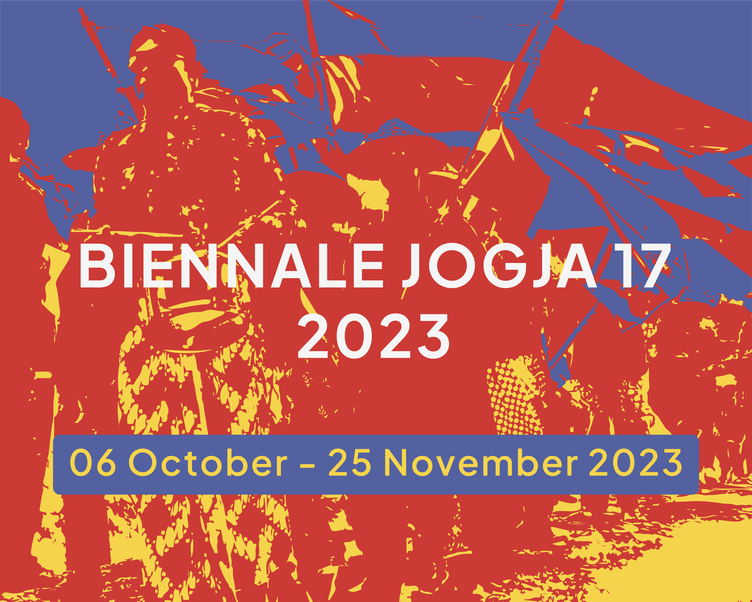
We are very excited to announce today our October appointment with IBA Stage in which we will host the director and curators of the 17th Biennale Jogja, taking place in Yogyakarta between October 6 and November 25. Biennale Jogja has developed throughout the years since its inception in 1988 as an institution with very strong ties to its local context. Since 2011 the institution has developed a unique approach defined as “Equator series”, centered around collaborations with other institutions, artists and curators with the equator as a connecting factor to propose the idea of new geopolitics and internationalism by clearly referring to a physical region on the map (23° N to 23° S). The idea offered a criticism and a new interpretation of the art world map, successfully gaining international attention. By collaborating with India, the Arab Region, Nigeria, Brazil, Southeast Asia, and the Pacific, Biennale Jogja successfully gathered hidden historiographies and re-examined the network of Global South internationalism which was shaped by numerous similarities of landscape, climate, culture, spirituality, and the aftermath of colonialism.
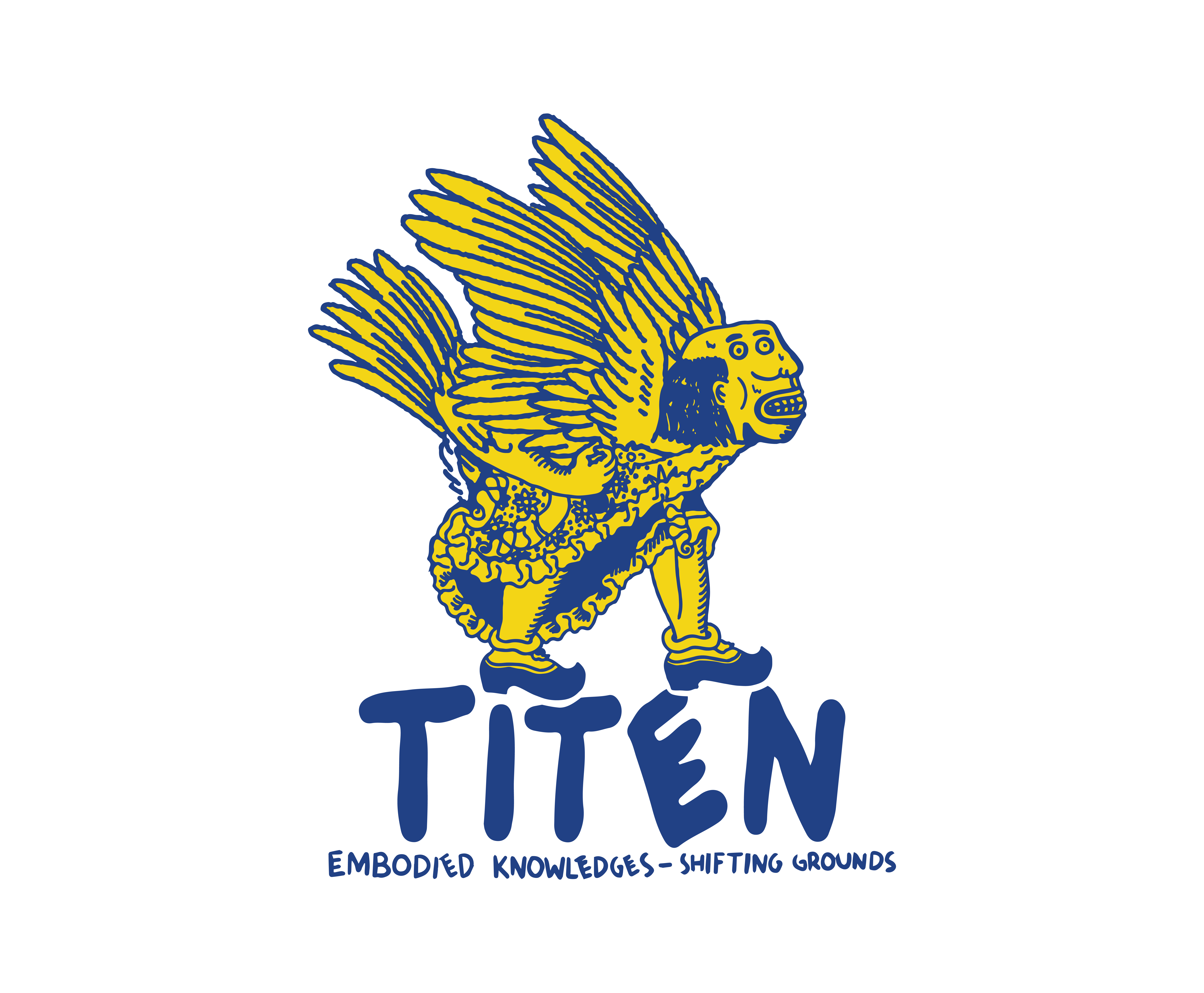
For its 17th edition Biennale Jogja developed largely around the rural areas around Yogyakarta, to create an encounter of contemporary art practices with local urban and rural communities, narrating the politic of locations from periphery. Curators for this edition, titled Titen: Embodied Knowledge, Shifting Grounds are Eka Putra Nggalu (Maumere/Indonesia), Adelina Luft (Romania) and Sheelasha Rajbhandhari and Hit Man Gurung (Nepal), with Nataša Petrešin-Bachelez as curatorial consultant.
“Thinking through Titen is part of an effort to decolonize the production of knowledge as a way to preserve local, embodied, and Indigenous worldviews while embracing them. Borrowed from Javanese, Titen or Niteni is interpreted as an ability or sensitivity to read signs from nature. Titen science is usually used to read natural phenomena before a disaster occurs, or to decide an action needed to respond to nature’s cycles. It is based on a pattern of repeated observations to later become a paradigm for interpreting natural phenomena, a particular narrative rooted in local belief. This contrasts the “scientific” gaze which renders Indigenous thought anachronistic, a system that disregards ecological interdependencies, classifies mountains and oceans into administrable units, and confines people in binary entities.
With the proposition of translocality and transhistoricity we can create an encounter of decolonial, situated practices that strive to protect, preserve, repair, and make space for new ways of living and producing that move beyond Eurocentric paradigms. Moving the location of these encounters into the semi-periphery of Yogyakarta is to engage in a long-term reciprocal dialogue and exchange to sustain a common ground by allowing the intersection of plural and particular histories as well as acknowledging the specificities of various localities, languages, customary situations and production systems. While we understand the village as a non-definable and dynamic area, a multitude, or a certain practice and shared identity, it is also a space which allows us to reposition our relationship with the soil and the local ecology, celebrating harvests and seasons, as well as the sociality and conviviality of communal life. This very act requires us to commit to mutual care as an act of survival through collaborative and multiple approaches to cultural activism, bringing together various stakeholders: artists, activists, farmers, caretakers, architects, designers, collectives, heads of villages, and governmental officials.
This edition is also an experiment to investigate and counter the experience of inferiority, anxiety, questions of identity and legitimation that have been constructed and maintained by the dominant and exclusive art system. Art cannot be institutionalised nor merely validated by alleged professionals. Art is also a practice of life. It does not stop at matters of aesthetics, but continues in the forms of reclaiming, preserving, queering, celebrating kinships and nurturing the nature in which humans and nonhumans struggle to coexist. In doing so it also offers a new direction beyond greed, one in which we shape a sensorial opposition to a world that forces us to dissociate; where rest becomes resistance – time is taken to heal – and to counteract the perpetual exhaustion endured by our lands and bodies.”
As always IBA Stage events are meant as a moment to hear about a project through its makers and have the opportunity to participate in a Q&A session at the end of the presentation.
Click here to register for the event or follow us through our usual social media channels.