
Graphic Courtesy of Istanbul Biennial
18th Istanbul Biennial: First Leg to Open in September 2025
20 September – 23 November 2025
Curator: Christine Tohmé
bienal.iksv.org
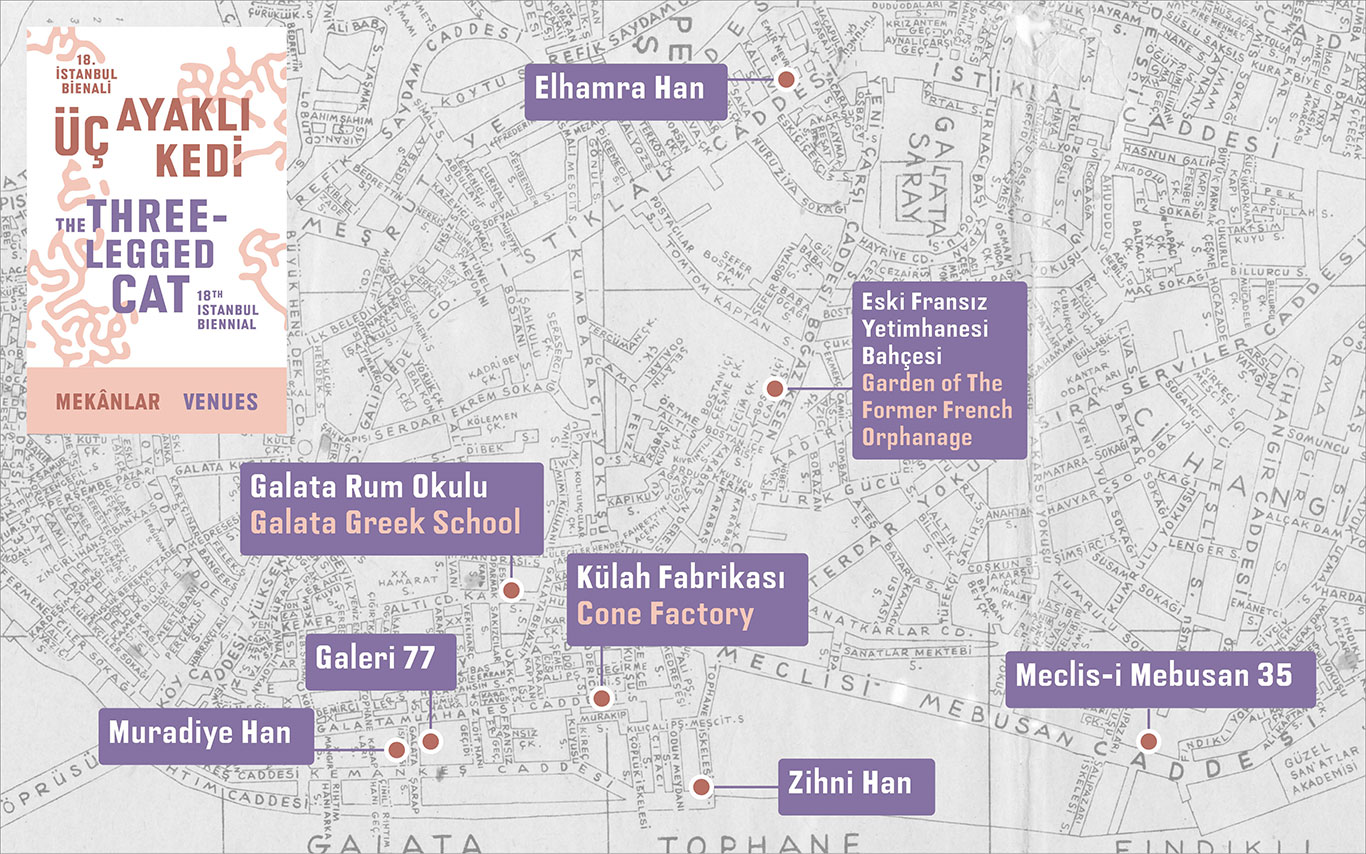
The Istanbul Foundation for Culture and Arts (İKSV) has announced the dates and venues for the first leg of the 18th Istanbul Biennial, set to take place from 20 September to 23 November 2025. The biennial, curated by Christine Tohmé, is titled The Three-Legged Cat, and marks the beginning of a three-year cycle.
With no fixed permanent venue, the Istanbul Biennial has long used the city itself as a generative force. This 18th edition continues that legacy, deepening the spatial-political relationships between the exhibition and Istanbul’s evolving urban fabric. In doing so, the biennial positions itself as a porous, multi-sited project embedded in the rhythms and histories of the city.
A key site for past editions, the Galata Greek School returns after undergoing a full restoration (2019–2024). Built in 1885 and closed in 1988, the school’s return as a cultural space signals a renewed engagement with collective memory.
Other venues include:
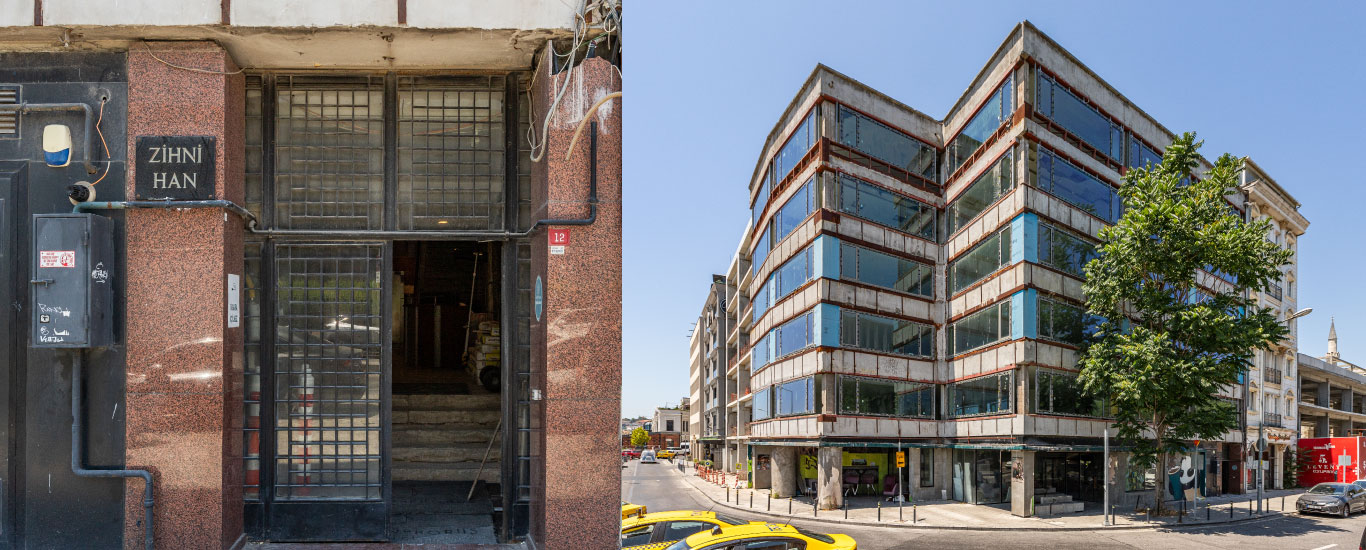
Zihini Han. Courtesy Istanbul Biennale
Zihni Han, a recently refurbished 1973 building once home to a shipping agency in Tophane, now surrounded by the rapid transformation of Galataport;
First established in 1930 as the headquarters of a shipping agency and rebuilt in 1973, Zihni Han is an understated five-storey commercial building located in Tophane, a historic maritime gateway that once linked Istanbul to the Levant. The building has remained intact amid the sweeping waterfront development of Galataport, and was recently refurbished in order to serve as one of the venues for the 18th Istanbul Biennial.
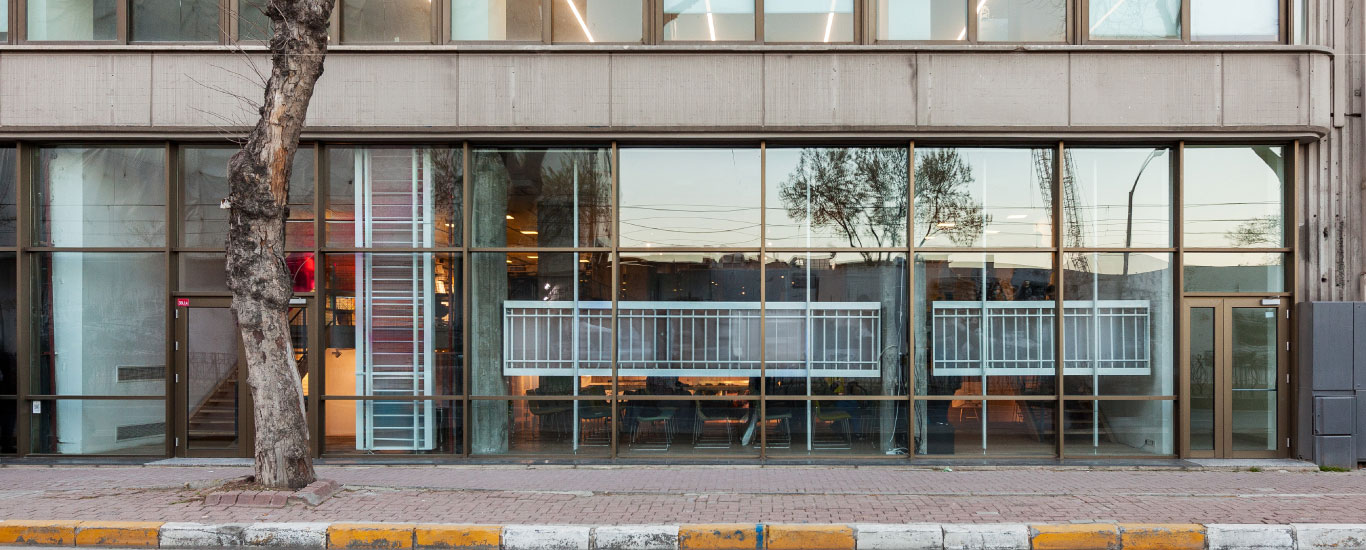
Meclis-i Mebusan 35. Courtesy Istanbul Biennial
Building No. 35 on Meclis-i Mebusan Avenue, now adapted for exhibition use;
Built in 1983, Meclis-i Mebusan 35 is owned by the Turkish industrial conglomerate Borusan. Between 2013 and 2019, it housed Studio-X Istanbul as part of a global network of urban laboratories dedicated to envisioning the future of cities. As such, the building became a hub for events, research, and conferences that primarily revolved around urbanism, architecture, and politics. The space also served as one of the venues for the 3rd Istanbul Design Biennial in 2016. Today, the ground floor is being reactivated as one of the venues for the 18th Istanbul Biennial.
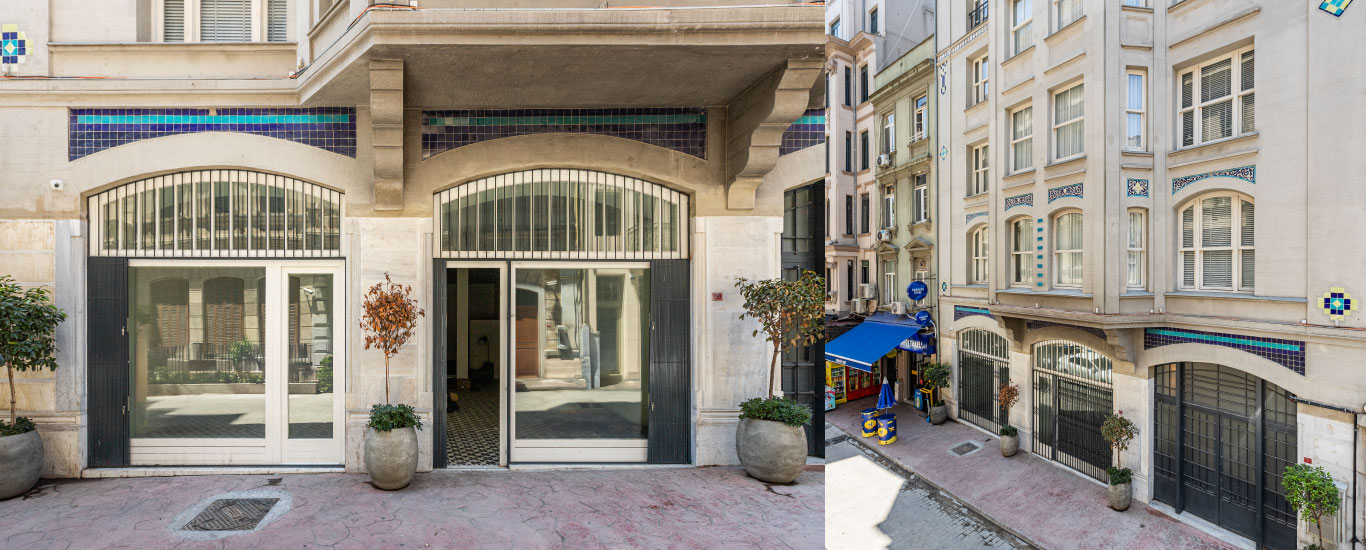
Muradiye Han. Courtesy Istanbul Biennial

Gallery 77. Courtesy Istanbul Biennial
Muradiye Han and Galeri 77, across from each other on Galata Wine Dock Street—once a central artery for wine trade with the Aegean;
Muradiye Han was designed as a trading house by architect M. Vedad Tek, a leader and practitioner of the First National Architecture Movement which incorporated stylistic elements of classical Ottoman architecture with European academic design principles. Completed in 1914 and originally known as ‘Sabit Bey Han’, the six-storey building played a vital role in Karaköy’s commercial life. During the occupation of Istanbul following World War I, it was used by French military forces and came to be known as the Muradiye Guardhouse. In 2021, the building underwent a comprehensive restoration led by architect Han Tümertekin. Today, its newly revived ground floor is being opened to the public on the occasion of the 18th Istanbul Biennial.
Built in 1895, this four-storey building located in Karaköy, directly across from Muradiye Han, originally served as a wine storehouse owned by the Greek community in Istanbul. Later on it became the storage facility warehouse for Tariş Şarabı, a brand of wine produced during the 1930s by the Grape Union within Tariş, the Turkish agricultural cooperative. The street on which it stands once led to Galata’s historic wine dock, a major hub for wine trade where barrels arrived from across the Aegean. Today, it is still known as Galata Şarap İskelesi Sokak (Galata Wine Dock Street). Following recent renovations, the building now houses Galeri 77, a privately owned contemporary art gallery founded in 2012. The entirety of the building is activated as exhibition spaces for the 18th Istanbul Biennial.
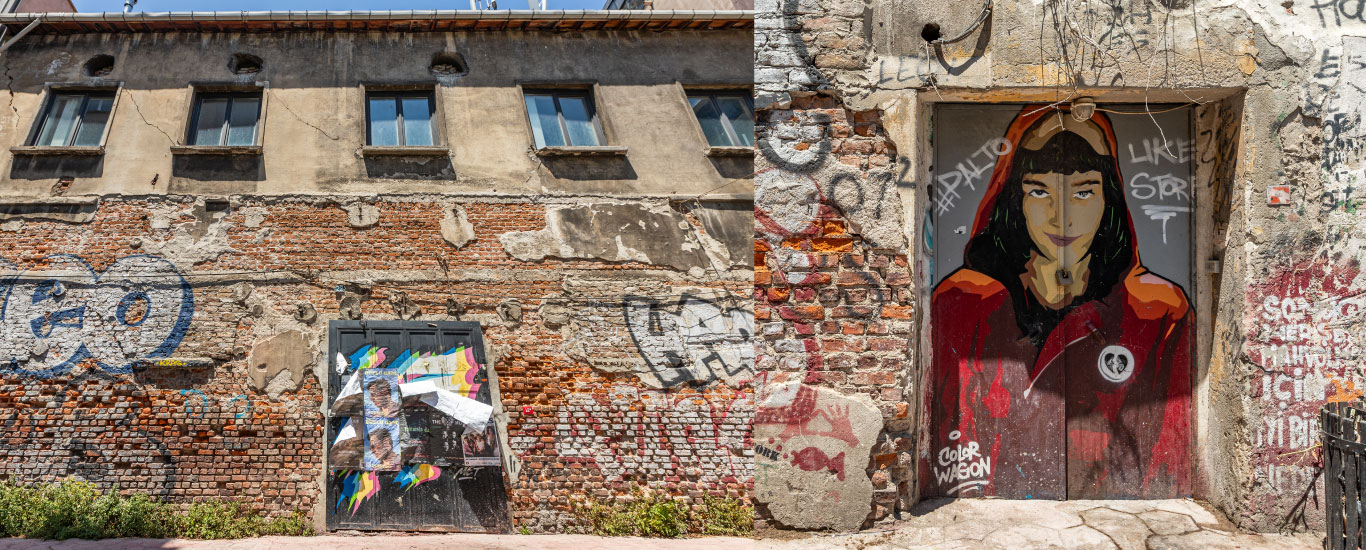
A former ice cream cone factory, now revitalized as a site for cultural experimentation;
Tucked into the backstreets of Karaköy, this former ice cream cone factory is a historic building accessed through a raw brick façade layered with graffiti and punctuated by heavy iron doors. Once home to an industrial sweets and cone factory, its cavernous two-storey hall has been revived in recent years as a site of cultural experimentation. The space has hosted weekly artisanal souqs, exhibitions, and for a time, used as a music studio for a local band that occasionally doubled as an impromptu concert venue. Located in a rapidly gentrified and commercially saturated neighbourhood, the structure now stands as a reclaimed zone of cultural engagement.
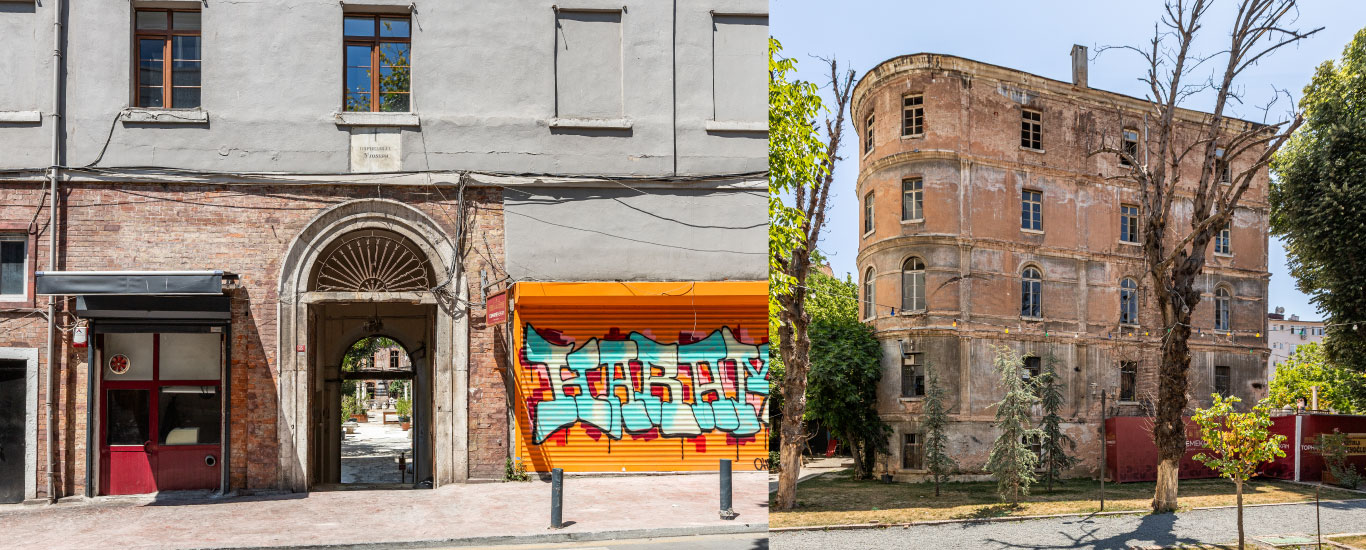
Former French Orphanage Gardens. Courtesy Istanbul Biennial
In 1869, Sultan Abdülaziz granted the land for this four-storey estate to the Daughters of Charity of Saint Vincent de Paul, on the condition that it be used as an orphanage. That same year, the Saint-Joseph French Orphanage opened its doors alongside the adjacent Saint Eugène elementary school. Both institutions remained active until 1937. The building’s deteriorating state, coupled with unresolved international legal disputes over ownership, eventually led to its acquisition by the Beyoğlu District Municipality in 2022. The garden, relatively unchanged over the decades, with its bostan (community garden) wells, terraces and running water, now functions as a public space known as ‘Tophane Mekân’.
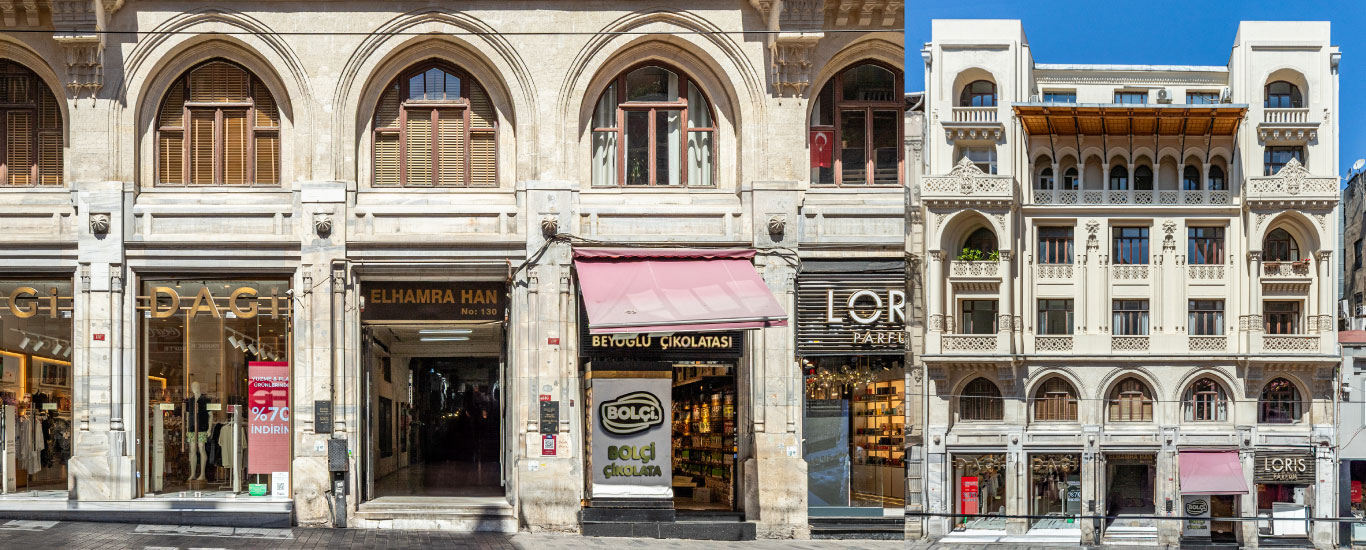
Elhamra Han. Courtesy Istanbul Biennial
This iconic, six-storey structure overlooks the bustling crowds of İstiklal Avenue. Originally built in 1827 as one of Istanbul’s earliest theatre halls, over time, the building transformed along with the city: first as a vibrant entertainment venue known as the ‘Palais de Cristal’ for its striking glass entrance, and later serving various commercial purposes. Throughout much of the 20th century, the building resonated with music, theatre, and cinema under various ownerships, until a devastating fire in 1999. Today, the ground level houses commercial shops, while the upper floors are privately owned and primarily used as offices. Two residential units on the second floor are being activated as exhibition spaces for the 18th Istanbul Biennial.
The 18th Istanbul Biennial is organised with the support of its long-term sponsor Koç Holding (2007–2036). More information on upcoming legs of the biennial will be shared in due course.