Toronto Biennial of Art Opens its 4th Edition: Things Fall Apart
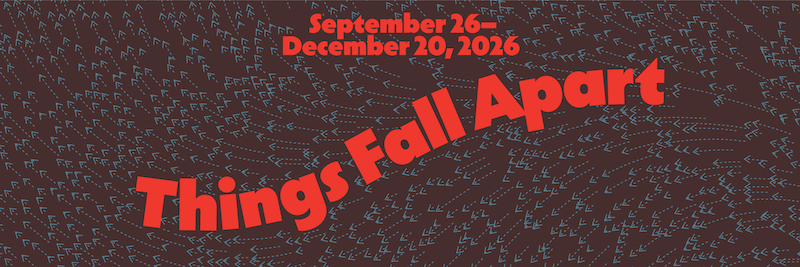
Toronto Biennial of Art 2026 – Things Fall Apart
September 26 – December 20, 2026
Curator: Allison Glenn
Toronto, Venues throughout the city
The Toronto Biennial of Art opens Things Fall Apart, its fourth edition, today, September 26. Curated by Allison Glenn, the Biennial brings together 30 artists and collectives across more than ten sites in Toronto. It includes 16 commissioned projects, alongside performances, conversations, gatherings, and artist-led events that will continue through December 20.
The public opening follows two Professional Preview Days on September 24 and 25, which welcomed arts professionals to explore the Biennial and its different sites.
Things Fall Apart starts with a central question: “What can we learn from artists who explore rupture as an ontological tool or a way of understanding?”
Glenn developed the exhibition through a multi-year research process. The result brings together themes that emerged from the work and voices of the participating artists including notions of diaspora, movement and migration, borders, water networks, maritime histories, the body, climate justice, material memory, speculative and science fiction, and the ways we create and transform knowledge.
The title Things Fall Apart also has a long history. Chinua Achebe used the phrase for his 1958 novel, taking it from W.B. Yeats’s poem The Second Coming. The Roots later used the same title for their 1999 album. For the Biennial, this history of borrowing and reuse offers a way to consider how artists, writers, and musicians have responded to moments of political and social change across different times and places.
Water and land connect many of the projects in the exhibition. Starting from the Great Lakes, the Biennial traces links between more than twenty waterways, trade routes, and voyages across five continents. Things Fall Apart builds on the Toronto Biennial’s interest in waterways, which has been part of its program since its first edition in 2019.
The Art Museum at the University of Toronto serves as the main exhibition hub and a key site for public and learning programmes. The Biennial also takes place across museums, galleries, public spaces, and other sites throughout Toronto. These include the Aga Khan Museum, Art Gallery of Ontario, Gallery TPW, Harbourfront Centre, Mercer Union, Royal Ontario Museum, Sankofa Square, Scarborough Gurdwara, Toronto Pearson Airport, and Toronto’s public transit system.
The opening weekend brings many of these sites to life through performances, conversations, and gatherings. On September 26, Rebecca Belmore presents Gichigami, which moves from Queen’s Park to the Art Museum at the University of Toronto. Raphaël Barontini presents Konvwa libèté, a street procession that draws on Caribbean traditions of emancipation.
The program continues on September 27 with Speculative Futures, a conversation moderated by Allison Glenn with participating Biennial artists. The discussion looks at time, science fiction, Indigenous knowledge, and speculative futures. Later that day, Brendan Fernandes presents The Calls (Toronto), an immersive sound performance aboard a tall ship in Toronto Harbour.
A wide public program will continue throughout the twelve weeks of the Biennial, with performances, talks, workshops, storytelling, screenings, education, and community gatherings taking place across its different sites. Early October includes programs around the work of Nirbhai (nep) Singh Sidhu, including The Biennial Express, a bus tour connecting his work across three sites in Toronto, and a Spotlight Talk with Deep Kaur Kailey. During Nuit Blanche on October 3 and 4, projects by Andrés Ramírez Gaviria and Julien Creuzet will extend into the night at the CN Tower and Sankofa Square.
From October 16–18, An Arrival, A Grounding, A Departure will form one of the central moments of the Biennial’s public program. The three-day gathering brings together artists, community members, researchers, Elders, scientists, organizers, farmers, musicians, and others through conversations, performances, meals, and shared experiences. It asks what we can learn from those who hold and carry knowledge, and how new forms of knowledge can emerge from collective experience.
Other programs continue through December, including public storytelling sessions and a series of Deaf View/Image Art (De’VIA) Storytelling sessions led by artist and educator Maryam Hafizirad, which invite Deaf, hard-of-hearing, and hearing visitors to engage with artworks through visual storytelling, ASL, gesture, body language, memory, and discussion. Together, these programs extend the ideas of Things Fall Apart beyond the exhibition and create different ways for audiences to take part throughout the Biennial.
The 2026 edition also introduces TBA Parallel Projects, a new initiative connecting the Biennial with exhibitions across Toronto that feature artists taking part in Things Fall Apart. The program gives audiences more ways to encounter their work while drawing attention to exhibitions taking place across the city during the Biennial.
Since its first edition in 2019, the Toronto Biennial of Art has developed a free and publicly accessible model centred on contemporary art, new commissions, and engagement with Toronto and its communities.
As a member of the International Biennial Association, the Toronto Biennial of Art is an active part of our international network. We are pleased to celebrate the opening of Things Fall Apart and congratulate curator Allison Glenn, Founder and Executive Director Patrizia Libralato, the participating artists, and the Toronto Biennial team and its partners on this new edition.
Things Fall Apart is open across Toronto from September 26 through December 20, 2026.
For more information on the program of the 4th Toronto Biennial click here.