
In preparation to the first of our #IBAConversations we publish a text kindly shared with us by Wato Tsereteli, founder and director of the Tbilisi Triennial and of CCA Tbilisi. In it he represents in a few sentences and very clearly the complexity of the situation in the country and wider region. We truly thank him for sharing this with us and hope it will lead to a stimulating discussion on Friday 26th.
We hope you enjoy the read!
If you have not registered yet please send your request to join at
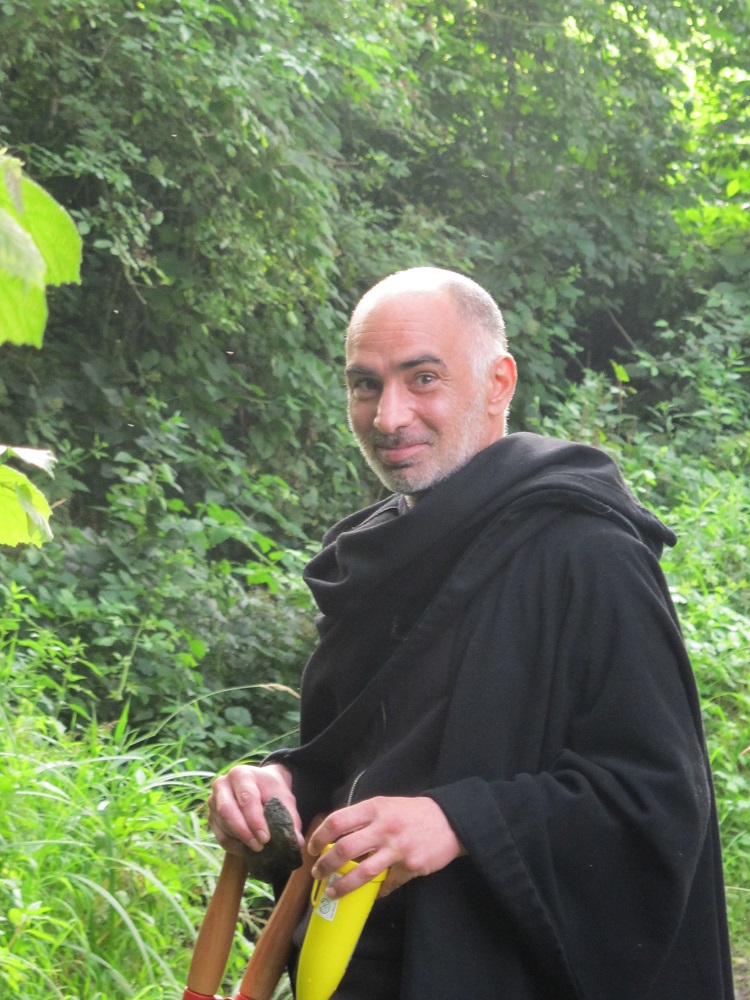
Photo Credit: Tina Bepperling
Tbilisi Method
Any narration is hard to imagine without references. To see the big picture, one need examine the detail. Black reveals white at its best.
Spaces between poles naturally turn into dynamic fields.
Artistic or creative products – in other words ‘artworks’ – are alive, active fields, rather than finished statements. They are similar to magnetic forces and their lives are like perpetuum mobiles. Simultaneously, the undecided areas of these forces are free spaces into which the spectator may step. Art has always been interactive, and dialog is an essential part of it.
Tbilisi is a living artwork, because of its 360° paradox.
In the middle of its historical center, various religions have their temples almost side by side, and inhabitants have coexisted peacefully for thousands of years. Near a large, liberal synagogue is a mosque where Shia and Sunni pray together. Gregorian, Catholic, and Zoroastrian houses of worship lie adjacent to Christian Orthodox churches.
This complements the almost disturbingly strong sense of identity Georgians have of themselves. Possessing a long-established history, language, and alphabet – all this creates the collective subconscious perception of being unique. This is the moment when your ego lifts ten cm off the plane of reality. The uniqueness of their egos is highly contested amongst Georgians; many contend to position themselves front and center, first and foremost. Yet they always remain divided into parts and fiefdoms.
There cannot only be one reason for this almost bizarre tolerance.
Partly, it is the historical trade route, which, depending upon war zones, acted as the northern Silk Road. Tbilisi is in the middle of the southern Caucasus. As such, it might be deemed a convenient, ordinary stop for caravans passing between the Black and the Caspian Seas, but in fact it was a hub. Armenian merchants traveling to Iran and India to collect silk and other textiles traded them in Tbilisi with Jewish merchants who brought the goods further to Europe.
There is great variety in the historical caravanserais in Tbilisi, the aptly designed buildings with enclosed atria that offered rest to travelers. Addressing the need to safely store goods, its architects designed the closed-circuit constellation, always with a central courtyard, to be surrounded by vaults, arches, or balconies. The buildings loop around, inviting one to spin in trance like a Sufi.
On the other hand, this inverted construction was host to a transcultural scenery. Beyond their roles as trade posts and stores of materials, the caravanserais served as news agencies. Stories, habits, and spices were in exchange.
Now in 2018, after the collapse of the Soviet regime and end to isolationism, Tbilisi has finally gained back its historical status: as a free city connecting places, especially the countries surrounding it.
One of the reasons people come here is freedom.
Instead of at the traditional caravanserais, trade now happens in office buildings. Oil has replaced silk. But the role of the city as a trade hub prevails.
On a daily basis, one can see how profitable this city is, as its cityscape transforms while the wealthy sequester away their investments, obscuring the architectonic history with their new building projects. Lax taxation laws in Georgia allow people from around the world to stash their capital here.
The architecture in Tbilisi displays its own scope of contradictions: kitsch vs. minimalism, Brutalism vs. Byzantine architecture, Socialist Classicism vs. Orientalism. In short, the ‘national style’ finds unity in its the incongruities.
Another reason of this irenic condition could be that Georgia is a for outsiders. Lying at the Eurasian crossroads, it is neither European nor Asian, neither Christian, Semitic, nor Muslim, etc. Consequently, it may feel like a buffer zone to its guests.
Recently, after driving for four hours from Batumi, my family asleep in the car, we finally enter the city. The weather was bad, the city full of traffic. But suddenly the consciousness of being in the city washed over me like the word Tbilisi spoken under breath. Its ‘warmth’ permeated to my very nerve endings.
While researching the city, it is noteworthy to consider both its etymology and geology. Both are interconnected. Tbili means ‘warmth’; Tbilisi is a place of warmth. This warmth, of course, is rooted in the thermal springs under the city.
In 2009, I was honored to be invited to contribute to the Georgian Pavilion at the 53rd Venice Biennale. One of my pieces in the main space was a central map of Georgia; another work was a fifteen-minute video essay entitled Descriptions: Tbilisi. One of the interviews it showcased was with Nodar Tsertsvadze, a geologist, who has done extensive research and written numerous publications on the thermal springs in Georgia. His project is amazing:
“You can heat a whole city, providing heat for 1.5 million people with this thermal energy. It requires special [thermal power] stations, which separate heat from water. Heat goes into the system and water flows back into the ground. It’s like having oil and buying it elsewhere!”
Unfortunately, the topic of this prospective renewable energy project is a neglected subject of discussion in Georgia. While the fate (or karma) and name of the city are interlinked, they both depend on its wellsprings.
“What!? Didn’t you know the best figs in Georgia are from Tbilisi?“ an old lady said to me in the market. Tbilisi has impeccable gardens, especially up the hill from Freedom Square.
“Didn’t you know that Tbilisi’s vegetation depends on its geothermal location?”
In India, I once visited a small village called Vashisht in the Himalayas. There are famous hot springs there, perceived by Hindus as a precious gift of the Creator. A temple is built around the site. You can pass through it to enter the women’s and men’s baths. It is a sacred site where rituals regularly take place and devotees adhere to extremely strict rules.
Now imagine Tbilisi, the city under which a huge reservoir of thermal springs lies. Yet few perceive the sacred potential of this phenomenon.
Walking and roaming around the city, showing and sharing the invaluable, overlooked, and undiscussed potential to curious visitors may finally be bringing results.
Usually, the predominant perspective in Georgia is that this country is not only complicated but dreadful in its geopolitical situation. How can this be? It seems absurd, that a place in itself might be clumsy. Apparently our position itself is off center.
What can Georgia offer to the international community?
There are few spots on this planet where you find as much ethnic and religious diversity in as small an area as Old Tbilisi. This is its true asset: it offers a desperately needed position at the current moment in international contexts. So, why not project the city’s exceptional past into the future and create a platform for peace and conflict resolution in Tbilisi?
“Where do you meet for talks with your Russian counterparts?” Zurab Abashidze, member of Parliament and a Special Representative for Russian Affairs in Georgia, was asked.
“In a hotel in Geneva we have a certain room that we always book,” he replied, articulating the importance of the conceptual design of a space for the atmosphere and success of negotiations – if the temperature goes up, or light changes, for instance. The acoustics and material properties matter. The smallest detail in a space can have a positive or negative impact.
The idea of turning a polarized Georgia into a space of peace provokes me more and more. One thing is clear: call it mysticism or not, thermal springs should be part of the architectonic plan for peace talks. The ‘Tbilisi Method’ needs to involve procedures involving the springs as a central element, a key geologic feature that has determined the fate of the city.
The text was first published in occasion of the exhibition:
“Lara protects me. A Georgian Story” Museum Angewandte Kunst Frankfurt, 21 September 2018 – 20 January 2019