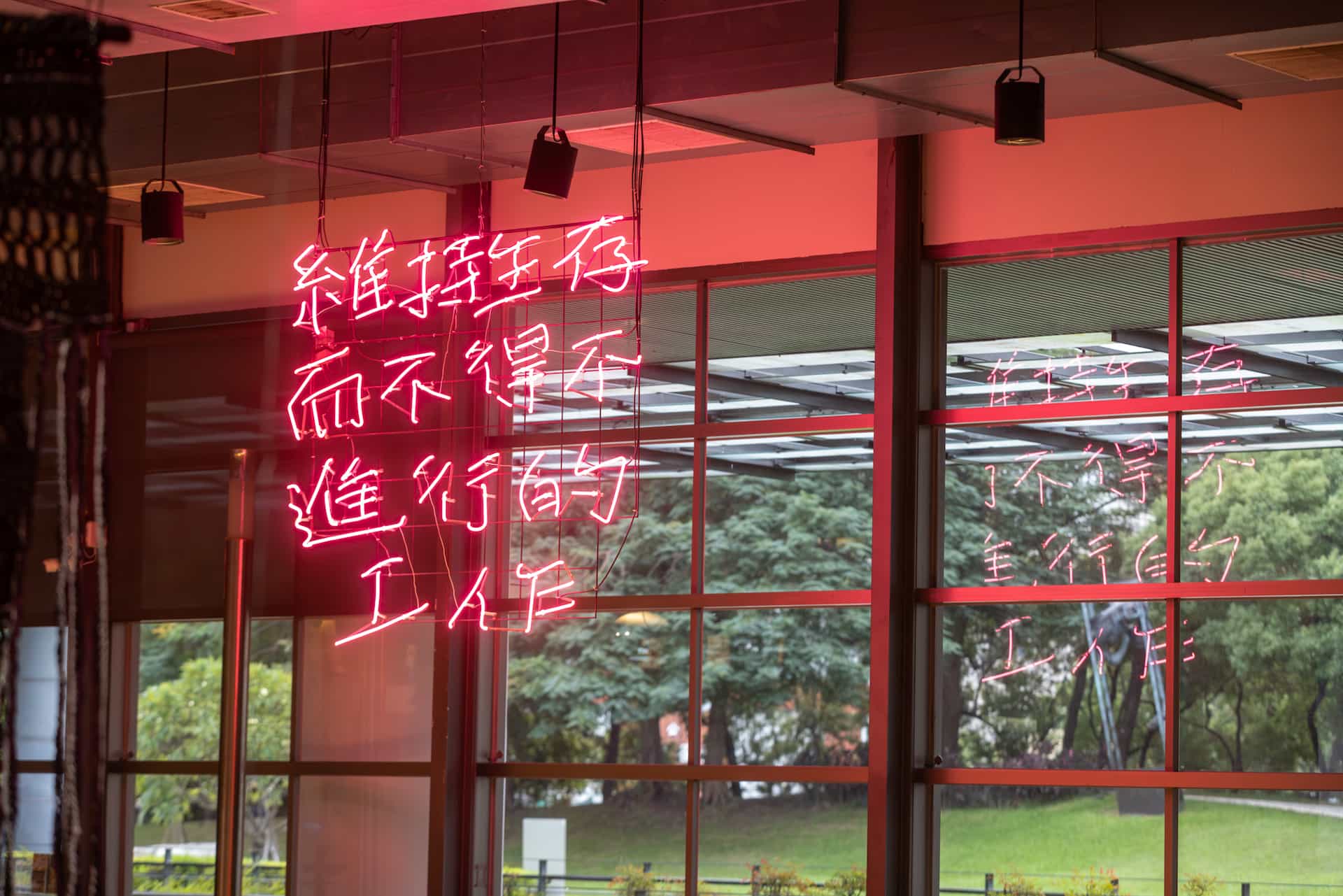
Brandon Ng, You May Be Loved (2025)
Courtesy of the artist and Hawai’i Contemporary
Photo: Duarte Studios
ALOHA NŌ is a call to reconsider what we think we know about the word aloha. While the term is often used and commercialized, its true meaning goes much deeper. Aloha is not just a greeting —it is a way of living, rooted in deep love, truth, and connection. Aloha is not just a feeling—it involves building meaningful relationships with the land (‘āina), the ocean, the environment, and with each other.
To know it in English, ALOHA NŌ is an expression of refusal and negation. To know it in ‘ōlelo Hawai‘i (Hawaiian language), ALOHA NŌ conveys a deep affirmation and intensity, to aloha deeply. ALOHA NŌ invites all of us—natives, settlers, immigrants and visitors—to know aloha and embody new understandings of love as acts of care, resistance, solidarity, and transformation. Equally it is a proposal to find the resonance across different cultures and geographies, especially sovereign is/lands with similar histories and struggles against colonial occupation and capitalist violence.
ALOHA NŌ manifests with more than a hundred of artworks and projects by 49 artists and art collectives from Hawai‘i, the Pacific, and the world. Accompanied by lively public programs, the exhibition is presented in multiple venues across O‘ahu, Hawai‘i Island, and Maui, for the first time extending beyond O‘ahu and echoing the potential of inter-archipelagic relations. The artworks you will encounter at each place and their constellations through the pathways would articulate the notion of aloha nō and unravel its kaona (layered meaning), including aloha ‘āina (love for the land), mo‘okū‘auhau (genealogy connecting people and place), mo‘olelo (storied traditions), and ho‘opono (healing through truth-telling, forgiveness, and mutual growth).
ALOHA NŌ shall contribute to heal the wounds inflicted on our ‘āina, our people, and our relationships, and foster the deeper connection of forgiving and loving to one another.